I have been doing SEO long enough to remember the days when you could throw a few backlinks at a page, stuff the keyword into the title tag a couple of times, and watch it climb. Those days are gone. The search engine now parses intent, evaluates entity salience, checks core web vitals, and weighs Google Page Experience signals before it even considers ranking your content. If you try to navigate this landscape without a structured plan, you will waste time and budget on tactics that never connect.
A few years ago I was helping a mid-market SaaS company rebuild its organic presence after a Google core update had hammered their traffic. They had good writers, decent backlinks, and a solid product. But every month they chased whatever keyword the CEO thought sounded promising. There was no thread connecting the content, no map showing which pages supported which topics, no way to measure whether their efforts were actually moving the needle. That is when I started looking for something more systematic than a spreadsheet. What I needed was a way to build an seo roadmap generator that could turn raw data into a repeatable process.
What a Roadmap Generator Actually Does
A real seo roadmap generator is not a buzzword. It is a framework that takes your current site data, your competitor intelligence, and your business goals and produces a step-by-step plan. Instead of guessing which pages to optimize next, you get a sequence based on impact and effort. Instead of writing random blog posts, you build content around a topic cluster model where each piece supports a pillar page.
The best tools for this kind of work pull data from multiple sources. You might start with Google Search Console to see which queries already bring traffic but rank on page two or three. Then you run those queries through SEMrush or Ahrefs to check the keyword difficulty score and see which SERP features are dominating the results. If the top results all have featured snippets or video carousels, you need to plan for those formats, not just another standard article.

From there, a content gap analysis shows you what your competitors cover that you do not. A backlink gap analysis reveals sites that link to them but not to you. A competitor URL intersection report can highlight overlapping keyword targets where a well-optimized page could steal traffic. All of this data feeds into the roadmap, which prioritizes the quick wins alongside the longer-term authority building.
Moving Beyond Keyword Lists
Most SEO plans still start with a list of keywords sorted by search volume. That is a starting point, but it is not a strategy. Volume tells you how many people search. It does not tell you whether they are ready to buy, whether Google considers the query important, or whether your domain has any chance of ranking for it. A keyword difficulty score from Moz or Serpstat gives you a better sense of the competition. But even that is only one dimension.
You also need to understand entity salience, which is how search engines interpret the main topics of your page. If you write about "digital marketing" but never mention "PPC" or "content strategy" in a meaningful way, Google may not trust that your page is really about that broad topic. LSI keywords help signal relevance, but they need to be woven into natural prose, not sprinkled like salt. TF-IDF analysis can show you which terms your competitors use more heavily, so you can adjust your own content to match the expected weight.
All of this analysis is useless if you do not have a plan that sequences the work. That is where the roadmap generator becomes essential. It forces you to answer questions like: Which pages need technical fixes first? Which content clusters are easiest to expand? Where are the biggest gaps between your current rankings and your revenue goals?
Practical Example: Building a Topic Cluster
Let me give you a concrete scenario. Say you run a site about project management software. You have a pillar page on "project management basics" that ranks around position 12. Your roadmap generator might flag that page as a high-impact target because it already has some authority but lacks supporting content. The plan would then call for creating cluster articles on subtopics like "Gantt chart best practices," "agile vs waterfall," and "resource allocation tips." Each cluster article links back to the pillar, and the pillar links out to them. Over time, the entire cluster gains topical authority, and the pillar page climbs.
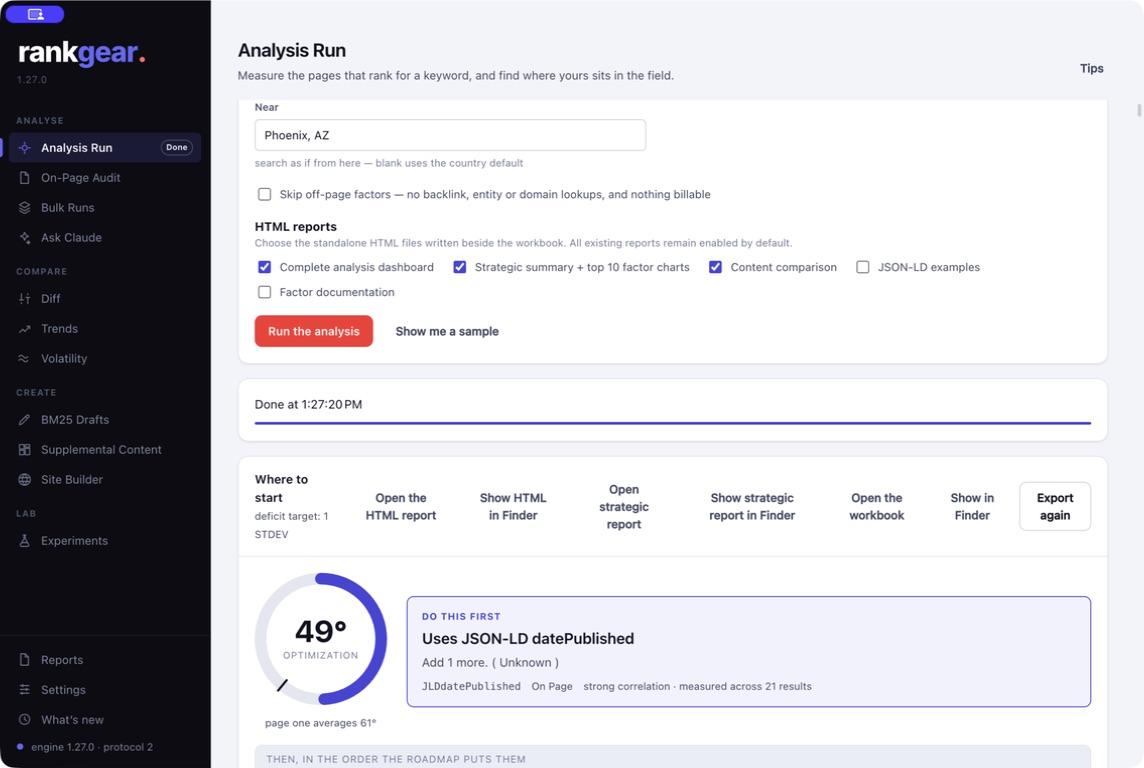
To execute this, you would use Yoast SEO or RankMath to optimize each page for its specific keyword while keeping the internal linking structure clean. You would monitor performance in Google Analytics, watching for increases in organic traffic and session duration. You might also check Google Search Console for impressions and click-through rates on the cluster pages to see which ones are picking up steam.
Tools and Trade-offs
There is no single tool that does everything perfectly. Ahrefs excels at backlink data and keyword difficulty. SEMrush offers strong competitor URL intersection reports and content gap analysis. Serpstat can be a cost-effective alternative for smaller budgets. Moz provides reliable domain authority metrics and easy-to-read reports. Google Search Console and Google Analytics are free and essential. But none of these tools alone gives you a roadmap. You have to combine the insights and impose a structure.
That is the real value of building an seo roadmap generator into your workflow. It does not replace the tools. It coordinates them. It tells you to check Ahrefs for backlink opportunities after you have fixed the core web vitals on your top pages. It tells you to run a TF-IDF analysis before you brief a writer on a new cluster article. It keeps you from spending three months on a content campaign when the real bottleneck is technical page speed.
The Human Element
I have seen teams buy expensive SEO platforms and still fail because they had no plan. They ran reports, exported PDFs, and then did whatever felt urgent. A roadmap generator cannot make decisions for you. It cannot replace the judgment that comes from knowing your audience and your market. But it can stop you from wasting time on low-impact work.
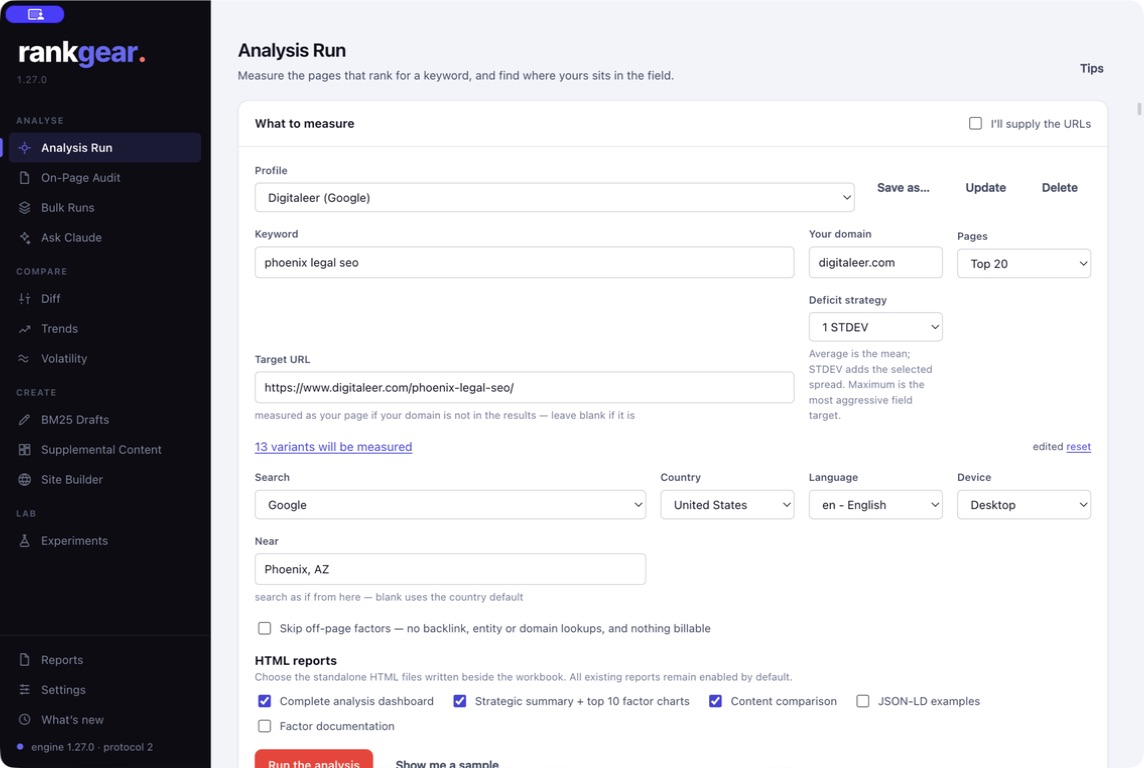
The best approach I have found is to start with a simple framework: audit, analyze, prioritize, execute, measure. Use tools like RankMath or Yoast SEO for on-page checks. Use Ahrefs or SEMrush for competitive intelligence. Use Google Search Console for real-world performance data. Then feed it all into your roadmap generator and let it produce a sequence that makes sense for your specific situation. Adjust the sequence as you learn what works. The roadmap is a living document, not a stone tablet.
If you are serious about SEO, stop treating it like a collection of tactics. Treat it like a discipline that requires planning, measurement, and iteration. A good roadmap generator turns that discipline into a repeatable system. That is the difference between guessing and growing.